

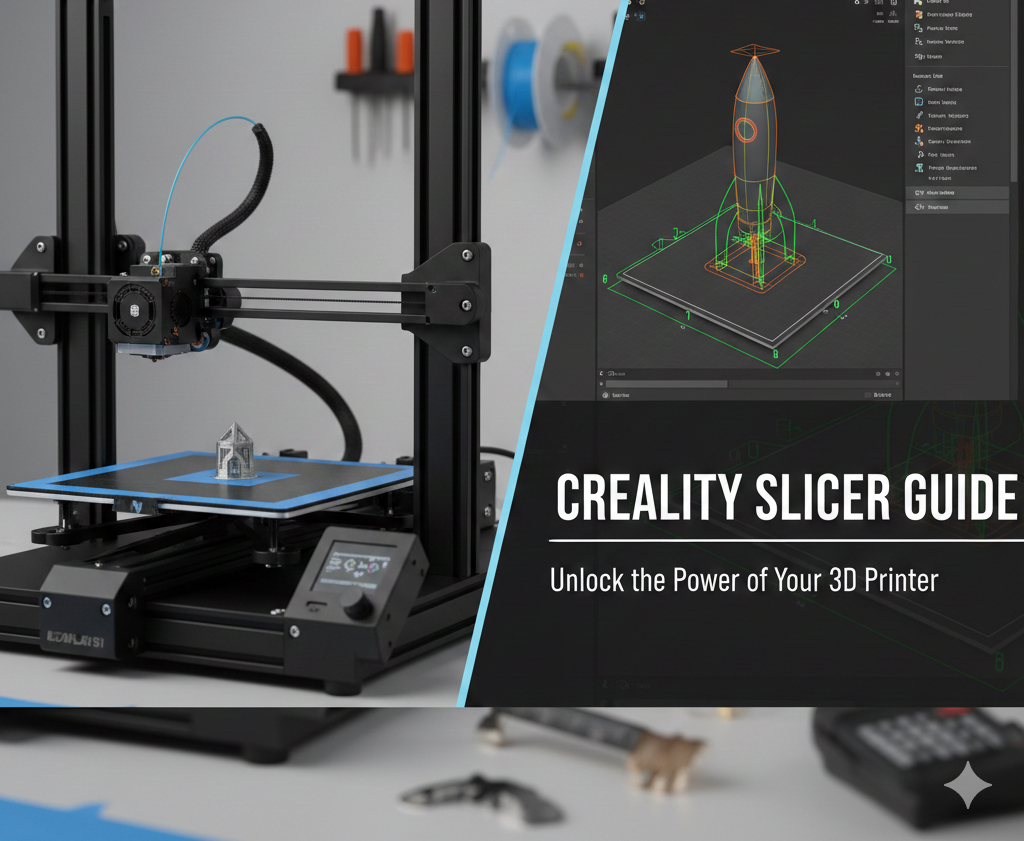
Creality Slicer 3D printing can be quite a challenging task, especially when you need to decide on the proper software to convert your digital designs into real-world products. That is exactly what I experienced when I rediscovered it with our brand new Creality Ender 5 S1.
Unboxing the printer, I noticed that the SD card given contained the latest version of Creality Slicer. Rather than going straight to my accustomed software, I thought why not take the chance and try it with the new machine. Here is a comprehensive guide if you are considering trying it out.
What is Creality Slicer?
Creality slicer is 3D painting software creators designed for creality series and accompany to be used. If you have been using Ultimaker Cura, then the appearance of the interface will be very familiar to you, as in fact it is an offshoot incarnation of underlying Cura engine that has been modified from ground up to work with Creality hardware.
The primary role of a slicer is to transform 3D models (typically in the form of an. STL or. OBJ) and had it sliced thinly, flat. It then outputs a list of instructions (or G-code) that tells a 3D printer how to perform every step and action.
Starting Out: Installation and Configuration
There is a huge advantage when you use the software off the SD card that comes with the printer because it normally has the right settings already done for your model of the printer.
1. Installation Steps
- File location: Put the SD card in your computer, find where the installer or driver is (usually an. exe for Windows and. dmg for Mac).
- Run the installer: Follow the prompts on screen. It’s a typical installation, keep on clicking Next until it is finished.
- Open the software: Once you have installed it, please open it on your desktop.
2. Selecting Your Printer
The first time you run the slicer, it will ask you to to choose your printer model. As I had an Ender 5 S1, I just picked it out of the list. Most importantly, this means that you will get the right bed and nozzle sizes automatically without having to do these calculations yourself.
Main Characteristics of the Most Recent Version
In the recent edition of Creality Slicer, the developers have added some excellent features that not only simplify the software for newbies but also make the workflow more productive for the pros.
- Customized Profiles: It features “Ready-to-Print” profiles for various types of filament such as PLA, PETG, and ABS.
- Simple UI: The interface is not cluttered. Just basic stuff on the right for quick prints and an “Expert” panel if you want to adjust retraction, cooling, etc.
- Creality Cloud Integration: Connecting to Creality Cloud is straightforward and, if your machine has Wi-Fi, you can even keep an eye on your prints from a distance.
- Improved Supports: The “Tree Support” mode has been upgraded significantly so now, it is quite effortless to separate the leftover plastic from your model and without any damage being done.
How to Prepare Your First 3D Model for Printing
For several weeks now, SELFCAD has been on the radar YouMagine with little teasers in sight for any beginners that may have seen the promise this sculpting tool brought with it. If you are just starting out on the software, this guide will help take you through how to set up your first print file.
Step 1: Load Your 3D Model
Click on the folder icon, or click the “Load” button at the top left. Navigate through your computer and select the 3D file you want to work on. The software will show you a virtual 3D build plate result of your design.
Step 2: Edit the Model
There on the left are instruments enabling modification of your three-dimensional model’s position, scale, and rotation. To get the best printing results when setting up your model for printing, make sure the flat surface of your model is resting on the build surface.
Step 3: Choose Your Settings
Here’s the right internal panel:
- Layer Height: Set it to 0.2mm for a regular quality print or go down to 0.1mm for exquisite details.
- Infill: 10% to 15% is a good range to keep it stable without overusing material.
- Enable this if elements of your design will be genuinely airborne.
Step 4: Slicing and Saving
Enable this if elements of your design will be genuinely airborne. After a moment, the software will disclose the estimated printing time and the amount of filament that it will consume. Next, press “Save to File” and transfer the G-code file onto your SD card.
Frequently Asked Questions (FAQs)
Is Creality Slicer free? Absolutely, the software is free for download and free to use for any Creality 3D printer owners.
Can Creality Slicer be used for other printing companies? Designed for use with Creality printers, Creality Slicer also lets you include custom printer profiles for other manufacturers should you so desire. For those with 3D printers other than Creality, though, it’s best to use Ultimaker Cura.
Creality Slicer is superior to Cura, is it not? Saying it is superior might not be accurate. It is especially practical for Creality users since the required profiles are already present. Cura, on the other hand, frequently introduces new experimental aspects a few months ahead their arrival at the Creality Slicer.
What distinguishes Creality Print from Creality Slicer? Creality Print is a solution developed by Creality that puts emphasis on cloud features and very fast printing. On the other hand, Creality Slicer is the traditional one which is essentially based on the Cura engine.
Conclusion
Basically, the Creality Slicer is an excellent “plug-and-play” choice, so long as you have a machine such as the Ender 5 S1. It takes away the guesswork by giving out tried and tested profiles that work professionally. Adhesive users might want to switch over to something with more feature-rich plugins at their disposal, but here you command all the functionalities for starting printing with premium quality.
